

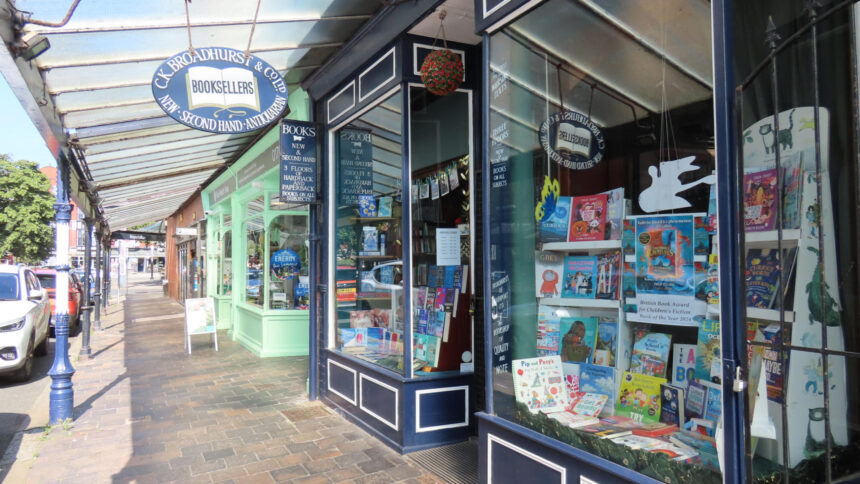
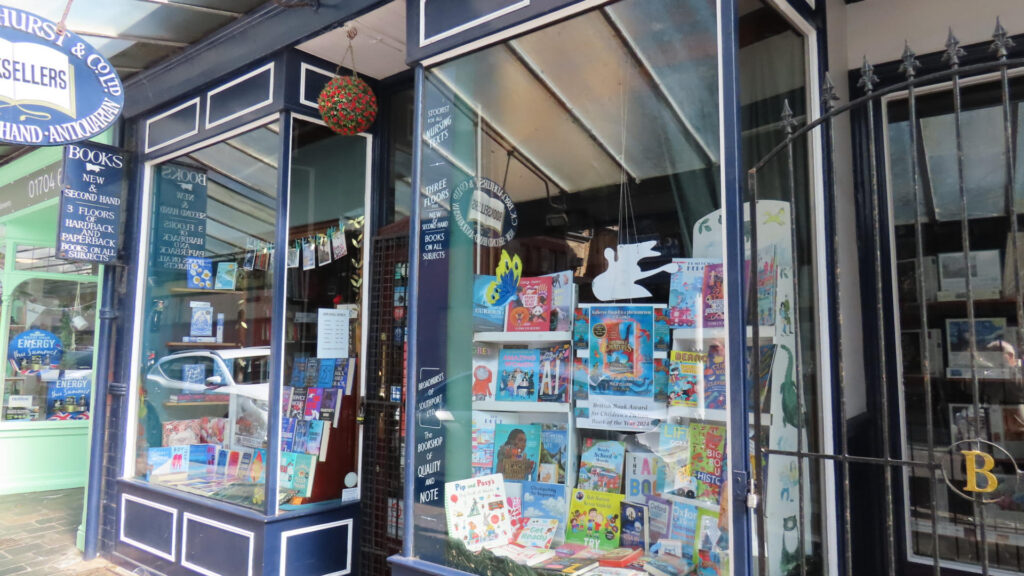
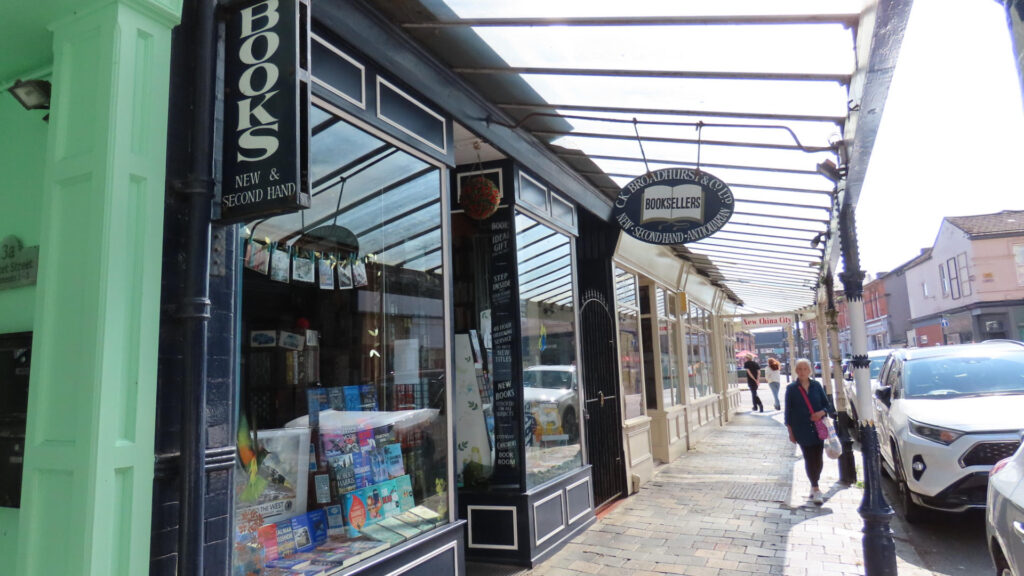
Plans have been revealed to convert the historic former Broadhurst’s bookshop in Southport town centre into a 8-bedroom HMO (House in Multiple Occupation).
The first, second and third floors of the building, at 5-7 Market Street, would host eight bedrooms for 10 occupants, while the ground floor would be used for commercial use.
The scheme would include limited internal and external alterations.
A planning application for the scheme has been submitted to Sefon Council.
Broadhurst’s bookshop was one of Southport’s oldest businesses, having traded since it was opened by Charles Kenyon Broadhurst in 1920, until its sudden closure two years ago.
The shop was famous for stocking over a million new and second hand books; booksellers wrapping up books bought by customers with brown paper and string; the roaring log fire and armchair; a superb children’s section; and historic and rare titles going back not just years but centuries.
Broadhurst’s bookshop was owned by Laurie Hardman, who tragically died in 2024 after 55 years in post. Mr Hardman began working at the shop in 1969.
The application behind the scheme says: “The proposal seeks to bring vacant and underutilised upper floors back into productive residential use while maintaining the vitality and viability of the town centre.
“The proposal represents:
● Reuse of previously developed land
● Efficient use of existing building stock
● Sustainable residential intensification
● Reduced reliance on private vehicles
“The proposal retains active ground floor Class E retail use and therefore maintains the commercial function of Market Street.
“Importantly, the upper floors historically functioned as ancillary commercial space and were not publicly accessible retail floorspace.
“Their conversion to residential use does not undermine primary frontage retail activity.
“The proposal supports town centre vitality by:
● Increasing resident population within the centre
● Supporting evening and weekend activity
● Increasing natural surveillance
● Enhancing building occupation and maintenance
“The reduction in tradable retail floorspace is modest (approximately 9.71m²) and does not undermine the viability or function of the retained unit.
“While the proposal is not an affordable housing scheme, HMOs form an important part of the housing mix by providing lower-cost shared accommodation. This assists in meeting housing needs across different income groups.
“The scheme contributes to housing supply without requiring greenfield land or suburban expansion.
“The scale of occupation (maximum 10 residents) is proportional to the size of the building.
The proposal does not involve any extension, increase in footprint or additional storeys. “Development is confined to the internal reconfiguration of the upper f loors, replacement of existing windows and the installation of two additional rooflights. The scale and envelope of the building remain unchanged.
“The upper floors are reconfigured to provide 8 bedrooms accommodating up to 10 residents. “The layout has been designed to ensure appropriately sized rooms, shared communal kitchen and living facilities, logical internal circulation and a protected internal staircase. The design makes efficient use of the existing structure without altering the external form of the building. The ground floor retail unit remains separate and self-contained.
“The absence of on-site parking is appropriate and consistent with sustainable development objectives. Cycle storage is provided to support sustainable travel.
“We believe the main thrust of the Conservation Area is focused towards Lord Street, with the side roads providing supplementary support, especially the seaward sides. Therefore Market Street has less significance.
“We also think that the development will prevent the ‘spiral of decline’ identified in the Conservation Area Management Plan.
“We believe the development will not impede on the character of the area, or negatively affect the appearance within the Conservation Area.
“We believe it will be a step forward for the Conservation Area.”
The 124-year-old Broadhurst’s was one of the oldest second-hand and antiquarian bookshops in the country, having been established in 1920 by Charles Kenyon Broadhurst.
The business traded continuously between 1920 and 2024 across four floors of its listed mid-19th century building.
The four floors of Broadhurst’s Bookshop held a comprehensive range of books suitable for all ages, interests and pockets.
The ground floor housed an extensive stock of fiction and non-fiction in paper and hardback editions for adults.
Upstairs were:
- Extensive children’s book department
- Two rare book rooms specialising in 19th and 20th century literature, modern first editions, private press books and a wide and interesting selection of antiquarian titles
- Eight second-hand book rooms containing upwards of 50,000 titles on all subjects
- A varied selection of 18th, 19th & 20th century prints and maps
- Bookbinding and restoration service
- School supply
Do you have a story for Stand Up For Southport? Do you need advertising, PR or media support? Please message Andrew Brown or email: [email protected]