



The historic 19th Century Conservatory at Hesketh Park in Southport is due to undergo a comprehensive repair and refurbishment.
The restoration of one of the North West’s most remarkable landmarks has been made possible thanks to the huge generosity of a local couple who loved the park and wanted to see it enjoyed by future generations.
Funding for the ambitious project has been secured thanks to the £850,000 legacy which has been gifted by Louis and Anita Marks.
A full planning application has now been submitted to Sefton Council seeking Listed Building Consent for the repair and refurbishment of the Hesketh Park Conservatory.
It will include a partial dismantling of components for off-site repair.
The comprehensive programme of conservation-led repair has been developed in response to the condition issues identified by Ian Bright Architects and the wider consultant team.
The works will retain and repair elements that make the Conservatory significant, including the cast-iron structure, glazing, canopy, masonry plinth, clerestory windows and its relationship with the park.
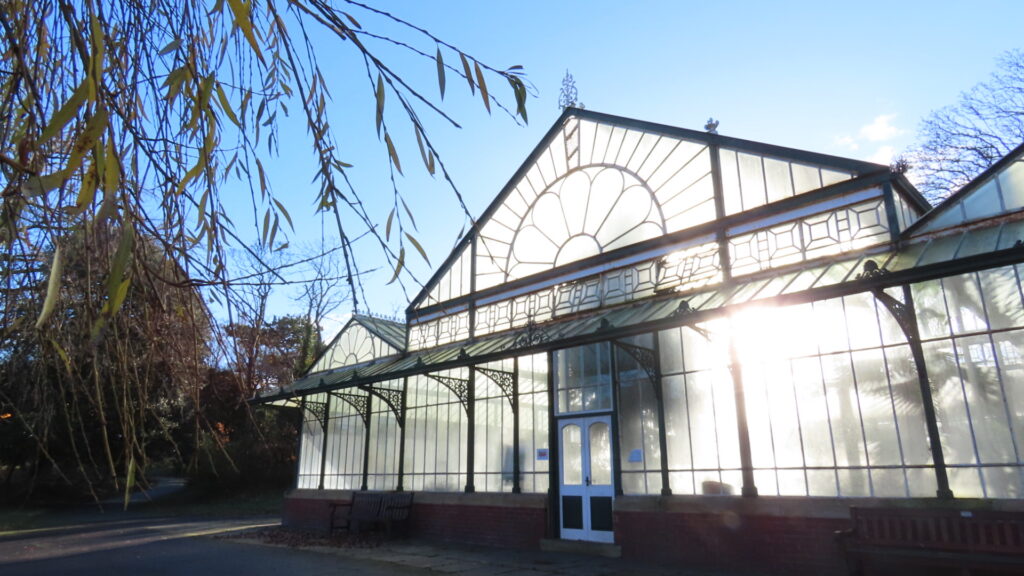
The proposals would preserve and enhance the special architectural and historic interest of the Grade II listed building whilst securing its long-term future.
The Grade II listed Victorian cast-iron and glass Conservatory was originally located at Brunswick Vill on Lord Street.
It was relocated to Hesketh Park in 1878 and has since become one of the defining features of the park and a prominent part of Southport’s historic identity.
The building contributes significantly to the special interest of Hesketh Park, a Grade II* Registered Park and Garden designed by Edward Kemp and recognised by Historic England as one of the country’s important surviving Victorian municipal parks.
The planning submission says: “The scheme comprises a comprehensive programme of conservation-led repair and restoration designed to secure the long-term future of the Conservatory.
“The restoration project is being funded through an £850,000 legacy gifted by Louis and Anita Marks and administered through a Grant Agreement between the trustees of the Marks estate and Sefton Metropolitan Borough Council.
“The funding was specifically intended to support restoration and enhancement works within Hesketh Park, with refurbishment of the Conservatory identified as the principal project.
“The proposed works have therefore been developed using a conservation-led methodology that prioritises repair of historic fabric, retention of significant architectural features and the long-term preservation of the building’s heritage significance.”
The Conservation Architect’s survey identifies extensive deterioration affecting the building. The principal defects include:
• Corrosion of cast-iron and metalwork.
• Failure of paint systems.
• Structural deflection of roof purlins.
• Corrosion of roof connections.
• Water ingress.
• Failure of rainwater drainage systems.
• Deterioration of clerestory windows.
• Defective glazing.
• Masonry deterioration.
• Failing doors and services.
• Deterioration of the associated boiler house.
The application says: “The building has been closed to visitors for a number of years because of condition and safety concerns. Continued deterioration threatens the long-term survival of significant historic fabric and would ultimately erode the special interest for which the building is listed.
“The proposed works have been developed by Ian Bright Architects, a RIBA Accredited Conservation Architect practice, following detailed condition surveys and investigations of the Conservatory and associated Boiler House.
“The overarching conservation philosophy is one of minimum intervention, repair before replacement, retention of historic fabric wherever practicable, and reinstatement of failed elements on a like-for-like basis.
“The works are intended to address structural deterioration, corrosion, drainage failures and building fabric defects that currently threaten the long-term survival of the listed building.
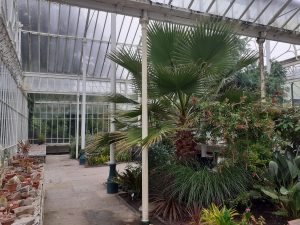
“No extensions, additions, enlargements or alterations to the building’s historic footprint, overall form or principal architectural character are proposed. The works seek to preserve the architectural characteristics specifically identified by Historic England.”
Work will include internal restoration of the existing York stone floor and terracotta planting-bed edgings, historic features that contribute to the character and significance of the Conservatory.
Drainage will be improved via the retention and restoration of historic gutters and hopper details, plus the complete replacement of failed drainage pipework and the restoration of historic drainage chambers.
The ornamental pond will be restored.
The glazed canopy will be carefully dismantled with all elements catalogued and numbered.
Off-site conservation and repair of individual components will then take place, along with specialist cleaning and preparation, plus repair of defective metalwork.
Repainting will be carried out in accordance with specialist conservation paint specifications. That will be followed by the reinstatement of all components in their original locations and configuration.
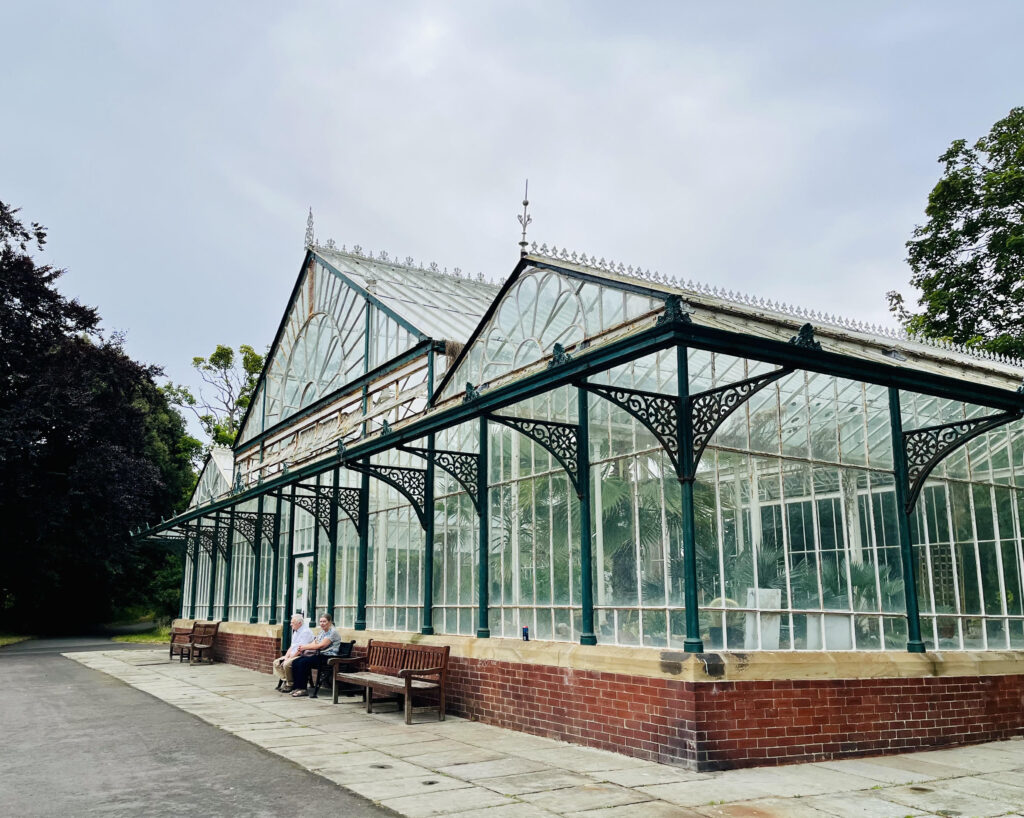
Improvements will be made to the cast-iron structure after surveys identified extensive corrosion, failed coatings, structural deflection and deterioration associated with historic water ingress.
The clerestory windows will be improved through off-site repair and conservation.
The glazing proposals include the removal and retention of historic glass wherever practicable, plus the careful cleaning and reinstatement of retained panes.
Masonry repairs to elements including the brick plinth and sandstone coping would include the removal of biological growth, localised brick repairs, stone repairs, and cleaning using low-impact DOFF steam cleaning techniques.
The existing timber entrance doors have deteriorated beyond practical repair and would be replaced.
Changes to the Boiler House would include timber roof repairs, masonry repairs, chimney repairs, vegetation removal and structural repairs.
Mechanical and electrical services would be revitalised with obsolete installations replaced to iImprove safety and operational performance and enable future public use.
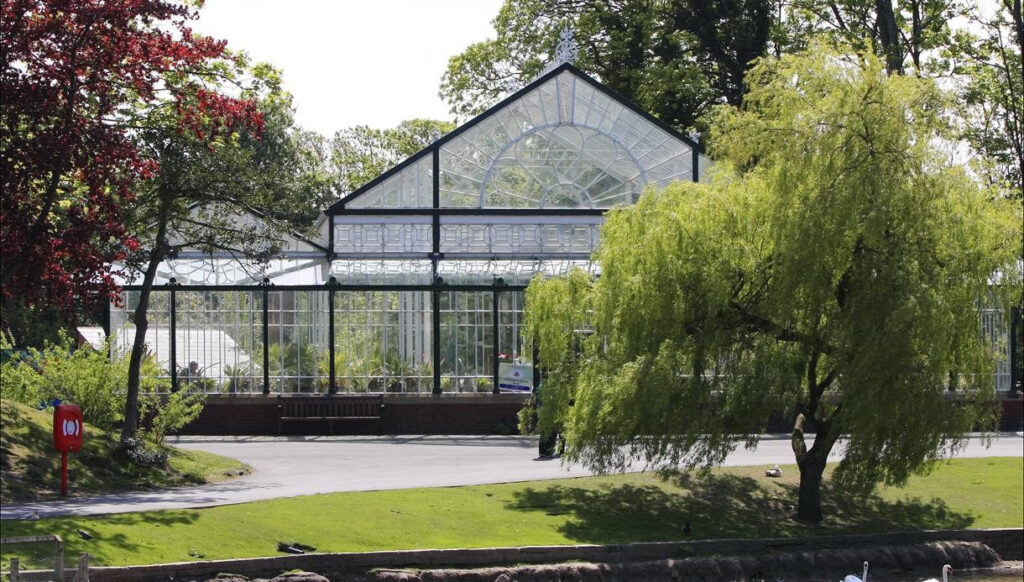
The planning submission says: “The Conservatory occupies a highly prominent position on the southern edge of the ornamental lake and constitutes a major focal point within the historic park landscape.
“Historic England records that the conservatory was purchased in 1877 and transferred to the park shortly thereafter. The building has remained in this location for almost 150 years.
“The Conservatory possesses substantial historic significance.
“Its relocation from Brunswick Villa into Hesketh Park during the Victorian period illustrates the importance attached to public parks, horticultural display and civic improvement during the nineteenth century.
“The transfer of the structure into a public setting reflects broader Victorian ideals concerning education, recreation and public health.
“The building has been associated with Hesketh Park since 1878 and forms part of the wider historical narrative of Southport’s development as a prosperous Victorian coastal resort. The Conservatory’s historic relationship with the park has become an important aspect of its significance in its own right.
“The Conservatory possesses considerable architectural significance as a surviving Victorian iron-and-glass structure. The building is an increasingly rare example of nineteenth-century glasshouse architecture and retains many of the characteristics that justified its designation as a listed building, including its cast-iron structure, historic glazing systems, decorative canopy, cresting, clerestory windows and overall architectural form.
“Its architectural significance is enhanced by its visual prominence within the park and by the quality of its decorative detailing, which reflects Victorian advances in iron founding and glasshouse engineering.”

Hesketh Park
Hesketh Park is included on the National Heritage List for England as a Grade II* Registered Park and Garden.
Historic England describes it as a public park opened in 1868 and designed by Edward Kemp, one of the most important landscape designers of the Victorian period.
Historic England further notes that the park may have been laid out to designs prepared by Joseph Paxton, for whom Kemp previously worked.
The park was established by the Southport Commissioners through the Second Southport Improvement Act of 1865 on approximately 23 hectares of land donated by the Reverend Charles Hesketh.
The park was opened in 1868 following construction works costing approximately £12,000.
Historic England identifies the park as an early example of a municipal park, whose original design remains substantially intact today.
Do you have a story for Stand Up For Southport? Do you need advertising, PR or media support? Please message Andrew Brown or email: [email protected]