



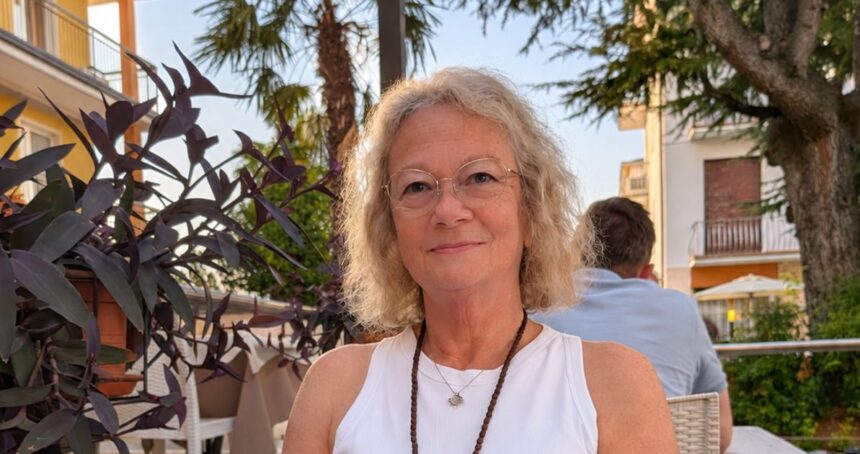
A childhood filled with unanswered questions, the loss of a mother, and a lifetime searching for the missing half of her identity.
For most people, knowing where they come from is something they take for granted. There are family photographs, stories passed down through generations, grandparents whose names are familiar, and relatives whose faces carry a resemblance to their own.
But for one woman, born in Southport nearly seventy years ago, those simple connections have remained an unanswered mystery for almost her entire life.
Annette Donaldson, nee Tomlinson, born in Southport in March 1957, has spent a lifetime wondering who her biological father was, where she truly came from, and whether somewhere there might be a family who never knew she existed.
Now living in Northern Ireland, Annette is hoping that someone in Southport may remember a name, a family, a friendship or a seemingly insignificant detail from the 1950s and 1960s that could finally help her piece together her story.
It is not a search motivated by money, inheritance or resentment.
It is something far more personal.
It is the search for identity, for belonging, and for answers to questions that have followed her from childhood into old age.
A LITTLE GIRL IN BANKS ROAD
Annette’s earliest memories are of growing up in Banks Road, Southport, in a house that seemed enormous to a little girl.
Her mother, Elsie Jenkinson, originally from Hertfordshire, was the central figure in her childhood.
Elsie later married a painter and decorator, believed to have lived in the Queens Road area of Southport, and became Elsie Tomlinson. Tomlinson was also Annette’s maiden name.
But the identity of Annette’s biological father was never openly discussed.
His name was not recorded on her birth certificate, and although her mother occasionally offered small fragments of information, the complete story remained hidden.
Annette grew up knowing that somewhere there was a man who had helped bring her into the world, but whose name she did not know.
Her mother told her that her father was married.
She also suggested that Annette had met him on several occasions without knowing who he was.
For a child, that was an extraordinary thing to be told.
Had she spoken to him? Had he smiled at her? Had he watched her growing up from a distance? Had she unknowingly looked into the face of her own father?
Those questions would remain with her for decades.
THE MOVE TO EDEN AVENUE
When Annette was around seven, life began to change dramatically.
Her mother was diagnosed with breast cancer, an illness that would progress over the following seven years.
As Elsie’s health deteriorated, managing the large house in Banks Road became increasingly difficult.
The family eventually moved to Eden Avenue in Churchtown, where life could be more manageable for a woman becoming progressively more unwell.
Annette remembers how illness gradually became part of everyday life.
Friends from those childhood years recall calling at the house and finding her mother in bed.
While other children enjoyed the carefree innocence of childhood, Annette was growing up in the shadow of a serious illness, although she could not fully understand what was happening.
There was another extraordinary detail that would only become significant much later.
Elsie had apparently confided in her close friend, affectionately known as Auntie Nell, that Annette’s biological father had lived very close to them when they were in Eden Avenue.
It is a tantalising clue.
Was he living in Churchtown? Did he have a wife and children nearby? Was he someone the family knew socially, or a man whose path crossed theirs through work?
For Annette, the possibility that her father may have been living almost on her doorstep is both fascinating and heartbreaking.
Perhaps she passed him in the street.
Perhaps he knew exactly who she was.
And perhaps there are people still living in Southport who remember him.
THE CONNECTIONS THAT MAY HOLD THE KEY
Over the years, Annette has tried to reconstruct the world in which her mother lived during the 1950s.
There are possible connections to Brockhouse and Crossens Gas Works, places associated with Southport’s working and industrial history.
She believes her mother may have known her biological father through employment, although this has never been established.
There is also a possible connection involving Albert Bowman of Russell Road, Southport, which Annette hopes may mean something to older residents or their descendants.
She is particularly interested in hearing from anyone who remembers Albert Bowman, his family, or connections between Russell Road, Churchtown, Banks Road and the people who lived and worked in those areas during the 1950s.
At this stage, these are pieces of a puzzle rather than confirmed answers.
But family histories are often unlocked by the smallest detail.
An old photograph. A name mentioned at a family gathering. A former neighbour. A workplace friendship. A story that somebody remembers hearing from a parent or grandparent.
One person’s distant memory could be the missing piece of Annette’s life.
AN UNUSUAL CHILDHOOD MEMORY
Among Annette’s more remarkable memories is a visit with her mother to the home of Albert Pierrepoint, the former hangman, on Preston New Road in Southport.
She remembers Pierrepoint being present and recalls the beautiful dahlias growing in the garden.
She also remembers visiting the Rose and Crown public house at Much Hoole, which Pierrepoint had once run.
These memories have remained unusually vivid, despite so many other details of her childhood becoming lost with time.
They are another reminder of the people and places that formed part of Elsie’s world.
And they raise another question.
Who were the people her mother knew, and what connections might still be waiting to be discovered?
LOSING HER MOTHER AT FOURTEEN
The greatest tragedy of Annette’s childhood came when she was just fourteen.
After seven years of progressive cancer, her mother Elsie died following an overdose of Valium.
The court recorded a verdict of death by misadventure.
It was a devastating end to a childhood already overshadowed by illness, uncertainty and unanswered questions.
At fourteen, Annette lost not only her mother but the one person who could have told her the truth about her beginnings.
She subsequently spent the remainder of her childhood in care, until she was seventeen.
The loss would shape the woman she became.
There would be no mother waiting proudly at her wedding.
No mother to share the joy of the birth of her son.
No familiar voice on birthdays or Christmas mornings.
No opportunity to sit together as two grown women and ask the questions that had once seemed too difficult or too frightening.
And no chance to ask, once and for all, who her father had been.
For Annette, the grief was not confined to the day her mother died.
It continued through every milestone her mother missed.
Through the celebrations, the disappointments, the ordinary moments when a daughter simply needs her mum.
And beneath it all was another, quieter loss.
The loss of the chance to know the other half of herself.
GROWING UP WITHOUT A SENSE OF BELONGING
Annette has spoken candidly about the emotional consequences of growing up without the family connections so many people take for granted.
As a young girl, she struggled with feelings of not being normal or worthy.
Those feelings did not simply disappear when she became an adult.
Without the security of a familiar family history, she often felt different, as though everyone else had been given a map of where they belonged while she had been left to find her own way.
She built a life, became a mother and grandmother, and learned to navigate the world with determination.
But outward strength does not always tell the whole story.
She describes herself as naturally shy until she knows someone well, something she believes is connected to a lifelong fear of rejection.
Yet she is also someone who would go to extraordinary lengths to help another person.
Perhaps that is one of the contradictions of a life shaped by loss.
The very person who fears being rejected may be the one who tries hardest to ensure that others never feel abandoned.
Now, approaching seventy, Annette is reflecting on how deeply those early experiences have influenced her life.
There have been happy times, loving relationships and many reasons to be grateful.
But the unanswered questions have never entirely gone away.
A DNA RESULT THAT CHANGED EVERYTHING
In recent years, modern DNA testing has added an unexpected twist to Annette’s search.
For much of her life, she believed that her family background was rooted in Lancashire.
After all, she was born in Southport, and that was the place she had always regarded as home.
But her DNA results told a rather different story.
According to her ancestry estimate, approximately 37 per cent of her DNA is Irish, with the remainder associated with Yorkshire rather than Lancashire, as she had always believed.
For a woman who has spent so much of her life wondering where she came from, the results were both intriguing and unsettling.
Could the Irish connection come from her father’s family?
Could the Yorkshire ancestry provide another clue?
Might there be relatives living in Ireland, Yorkshire, Southport or elsewhere who share part of her genetic history?
DNA ethnicity estimates cannot, by themselves, identify which parent contributed a particular ancestry or establish an individual family connection.
But they have opened another avenue of enquiry.
For Annette, who now lives in Northern Ireland, the Irish element carries a particular sense of curiosity.
She has spent years living in a place that her DNA suggests may also form part of her ancestral story.
Whether that connection is through her father or her mother’s family remains to be discovered.
THE FATHER SHE MAY HAVE MET WITHOUT KNOWING
Perhaps the most poignant part of Annette’s story is her mother’s suggestion that she had met her father several times.
It is difficult to imagine the emotional weight of those words.
Somewhere in her childhood memories may be a man whose face she once knew but whose identity was never revealed.
He may have been a neighbour, a family acquaintance, a colleague of her mother’s or simply someone who appeared occasionally in their lives.
He was, according to Elsie, a married man.
Annette has always understood that there may have been complicated circumstances surrounding her birth.
She does not wish to judge anyone involved or cause distress to surviving family members.
Nor does she know how much her father may have understood about her life.
But she would dearly love to know his name.
What did he look like?
Did she inherit his eyes, his smile, his personality?
Did he have other children?
Are there half-brothers or half-sisters somewhere who might recognise something of themselves in her?
Did he ever think about the little girl born in Southport in March 1957?
And did he ever wonder what became of her?
These are questions that cannot be answered by a birth certificate with an empty space where a father’s name should be.
They require memories, records, family connections and perhaps a little courage from someone who knows more than they realise.
WHY THE SEARCH MATTERS NOW
As Annette approaches her seventieth birthday in March 2027, the passage of time has given her search a new urgency.
She is also living with serious health challenges, having previously undergone surgery for kidney cancer and more recently been diagnosed with chronic myeloid leukaemia.
Such experiences inevitably bring a different perspective to life.
They make people consider what truly matters, what remains unfinished, and which questions they would regret never asking.
For Annette, this is not about rewriting the past.
Nothing can return the years she spent without her mother, or give her back the childhood she lost.
Nothing can replace the family memories that were never made.
But perhaps there is still time to discover the truth.
Perhaps there is still time to put a name to the man she has wondered about for almost seventy years.
Perhaps there is still time to discover a photograph, a family resemblance, or a story that will help her understand where she belongs.
And perhaps, somewhere, another family has its own unanswered questions.
AN APPEAL TO THE PEOPLE OF SOUTHPORT
Annette is now appealing to Southport residents, particularly those with family memories reaching back to the 1950s and 1960s.
She would be grateful to hear from anyone who remembers:
Elsie Jenkinson, later Elsie Tomlinson, who lived in Banks Road and subsequently Eden Avenue, Churchtown.
The Tomlinson family or a painter and decorator associated with Queens Road, Southport.
Albert Bowman of Russell Road, or anyone connected with his family.
People who worked at Brockhouse or Crossens Gas Works during the 1950s.
Families living around Banks Road, Eden Avenue, Churchtown or Russell Road who may remember Elsie or her circle of friends.
A woman affectionately known as Auntie Nell, who was a close friend and confidante of Elsie’s.
Any information about a married man who may have known Elsie in the years before Annette’s birth in March 1957.
She is particularly interested in old photographs, family stories, employment connections and memories passed down by parents or grandparents.
Even if someone is unsure whether their information is relevant, she would welcome the opportunity to hear it.
There is no accusation in this appeal and no desire to disturb anyone’s family unnecessarily.
Only the hope that kindness, memory and perhaps a little detective work might finally bring some answers.
THE LITTLE GIRL WHO NEVER STOPPED WONDERING
Almost seventy years have passed since a little girl was born in Southport without her father’s name on her birth certificate.
That little girl grew up, lost her mother, lived in care, built a life of her own and became a mother and grandmother.
She learned to be independent.
She learned to survive disappointment.
She learned that life does not always offer explanations, and that sometimes people carry questions for which there are no easy answers.
But somewhere inside the woman she is today remains the little girl from Banks Road and Eden Avenue.
The little girl who wondered why her father wasn’t there.
The little girl who watched her mother becoming increasingly ill.
The fourteen-year-old who lost the person she loved most, along with the chance to discover the truth.
And the woman who, despite everything, has never entirely stopped hoping.
Annette is not searching for a perfect family, a romanticised past or a happy ending that may never have existed.
She is simply searching for the truth.
A name.
A face.
A connection.
Something that might finally allow her to look in the mirror and know a little more about the person looking back.
And perhaps that is what makes her story so deeply human.
Because however old we become, however much life we have lived, and however independent we appear to the outside world, there is still something profoundly important about knowing where we came from.
For Annette, the answer may lie in a Southport family album, a fading photograph, an old workplace friendship or a story somebody has heard around the dinner table.
Somewhere, someone may hold the missing piece of a little girl’s story.
And after almost seventy years, she hopes that someone might be willing to share it.
CAN YOU HELP ANNETTE?
If you have any information relating to Elsie Jenkinson (later Tomlinson), Albert Bowman of Russell Road, the families of Banks Road or Eden Avenue, or possible connections to Brockhouse and Crossens Gas Works in the 1950s, Annette would be delighted to hear from you.
Even the smallest detail may help her piece together the family history she has spent a lifetime trying to discover.
Because sometimes, finding where you belong begins with discovering where you came from.
- If you have any information that can help please email: [email protected]
Do you have a story for Stand Up For Southport? Do you need advertising, PR or media support? Please message Andrew Brown or email: [email protected]