


Guest Blog by John Dempsey, Green Sefton
One of the most eagerly awaited days in the autumn calendar for Green Sefton is the return of the conservation grazing herd to the dunes at Ainsdale and Birkdale.
Each year, the herd of English Longhorns owned by Lancashire Wildlife Trust spend the winter months in grazing enclosures on Ainsdale and Birkdale Sandhills Local Nature Reserve.
It is always an exciting day when the cattle return to the dunes and are guided onto their winter quarters.
Before they do that, their paperwork and passports must be checked, much like our details are when we pass through an airport.
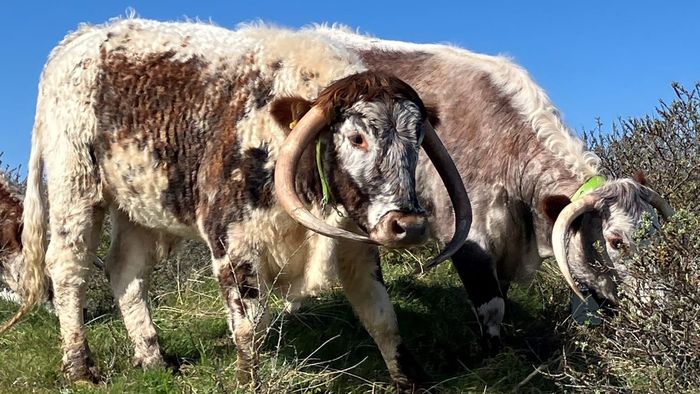
The English Longhorns, once a threatened breed, are a vital part of our winter campaign against invasive species and the spread of scrub on the dune system.
The Longhorns are big, imposing cattle, whose weight and size make them ideal for keeping the habitat in good shape.
As they graze, the cows break up vegetation, clearing areas to create open sand, or trampling unwanted scrub saplings.
This process is known as “poaching”.
When they head back to summer grazing meadows come March or April next year, they leave behind a more open dune landscape, attractive to many key species from Natterjack Toads to Sand Lizards.
A legacy of drying cowpats are great for invertebrates too, which form an important part of the dune eco-system. Given the efficiency of a cow’s digestive process, pats don’t add unwanted nutrients to the eco-system either.
Although big, the English Longhorns are docile creatures.
If anything, the cattle can be vulnerable to unwanted attention, and that is why the Public Space Protection Order for the coast now stipulates that all dogs must be kept on a lead within the grazing enclosures.
Failing to comply with this can result in a fixed penalty notice or fine.
While the cattle are obviously larger than any dog, they can get stressed if pets approach them, or worse attack them.
Like us, becoming stressed can have fatal consequences, and cattle can succumb to cardiac arrest if pets are allowed to get too close.
An episode in recent years where a number of grazing sheep on Ainsdale Local Nature Reserve were savaged and killed by a dog, also prompted a change to the Public Space Protection Order to ensure dogs stay on a lead.
It’s not hard – simply keep pets on a lead within the fenced grazing enclosures, whether cattle are in view or not.
The same is expected on farmland wherever livestock are grazed.
Signage on every access gate informs visitors of when the cattle are on site, but typically the longhorns arrive this month (precise date to be confirmed) and leave in spring before nesting and breeding season amongst our wild residents on the coast begins.
Subject to daily welfare checks during their stay on the dunes they are a welcome addition to the landscape.
Engaging as the longhorns are, please do not feed them – bringing them treats means they don’t graze as much as they should, and a healthy appetite is key to their role within the Green Sefton winter workforce.
Do you have a story for Stand Up For Southport? Do you need advertising, PR or media support? Please message Andrew Brown or email: [email protected]